 Escambray ENGLISH EDITION
The effects of noise on human health are enormous and more than scientifically proven. According to the World Health Organization (WHO), levels above 55 decibels during the day and 45 at night are considered harmful, to the point of causing everything from discomfort and sleep disturbances to chronic diseases such as hypertension or ischemic heart disease.
To make it more understandable, the institution itself clarifies that 80 decibels are equivalent to the sound of traffic, an alarm clock, or a train, while that of concerts or parties exceeds 110, far above the healthy threshold.
Another important fact is that less than 30 decibels is recommended in bedrooms for good sleep quality, and a figure below 35 in classrooms. In general terms, the highest permitted levels are 65; when it exceeds 85, it can cause chronic hearing loss.
In Cuba, noise pollution—that is, the excess noise generated by human activities, traffic, industry, or music—reaches unsuspected levels these days.
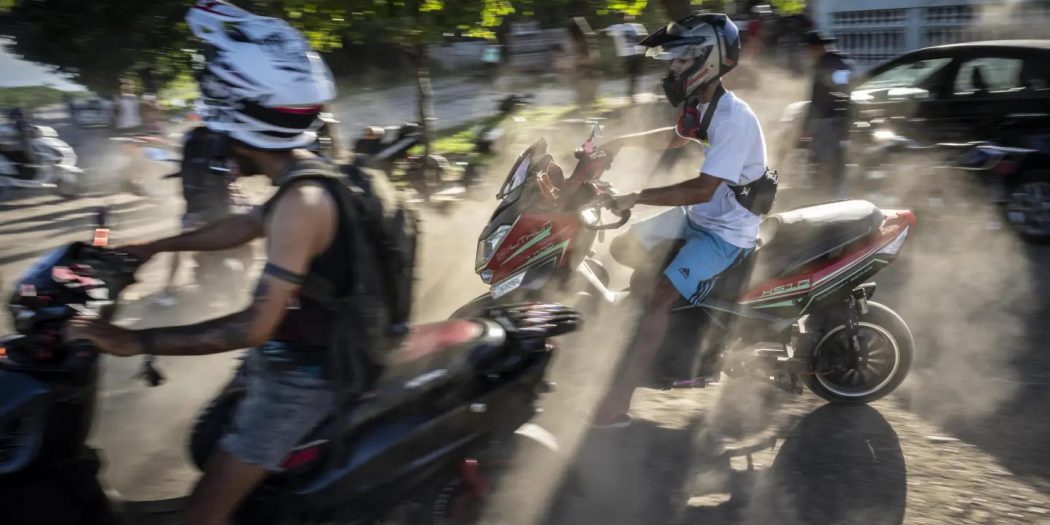
It is known that land transport is the main source of environmental noise in urban environments, but in Cuba it has a particularity: drivers of motor scooters, especially the youngest, do not know how to ride them without a powerful sound system.
It would be lengthy to write about anecdotes of one’s own and others’ regarding motorcycles, their noise, and the inseparable reparto music that accompanies the wandering of these vehicles, often with lyrics that border on vulgarity.
And what can be said about traditional motorcycles? Although in other times they traveled “normally,” now they ride without a muffler down any street and have become a kind of noisy terror when they accelerate to start, not to mention the occasions when they wake half the world with improvised races and outside what urban regulations dictate.
Noise is an unwanted sound, so it must be treated as a highly complex problem, mainly in large cities, with high volumes of traffic and other predisposing factors. But is there legislation on the matter?
There are provinces where calls have been made to lower the volume on electric motorcycles and other vehicles that circulate through our streets with strident horns, but a communication campaign does not solve the problem by itself.
Noise related to public and private parties until dawn is also frequent, with a harmful psychological impact when it comes to resting or when there are more vulnerable people around, such as bedridden individuals or small children.
According to data from Citma, in the face of sound pollution from loud music in recreational areas, people can file a complaint with the Ministry of Public Health, protected by Article 152 of Law 81/97 on the Environment, while when the noise comes from homes, pedicabs, horse-drawn carts, automobiles, among others, citizens can go to the nearest unit of the National Revolutionary Police, with the possibility of previously seeking advice through Decree No. 141 of 1988 “Violations of interior order regulations.”
Other sources of noise could be mentioned, such as the baker who shouts and blows a whistle still at dawn at any citizen’s window, or the neighbor who yells from one end of a building to the other; in short, social indiscipline and the lack of education, in a general sense, are already part of daily life and of the deterioration of values and norms, perhaps under the mistaken myth that we Cubans, with our Caribbean culture, are noisy by nature. But that has nothing to do with neglect, lack of control, lack of empathy, and the fact of not putting oneself in the shoes of those who see civic tranquility as the proper way to live in community.






Escambray reserves the right to publish comments.