 Escambray ENGLISH EDITION
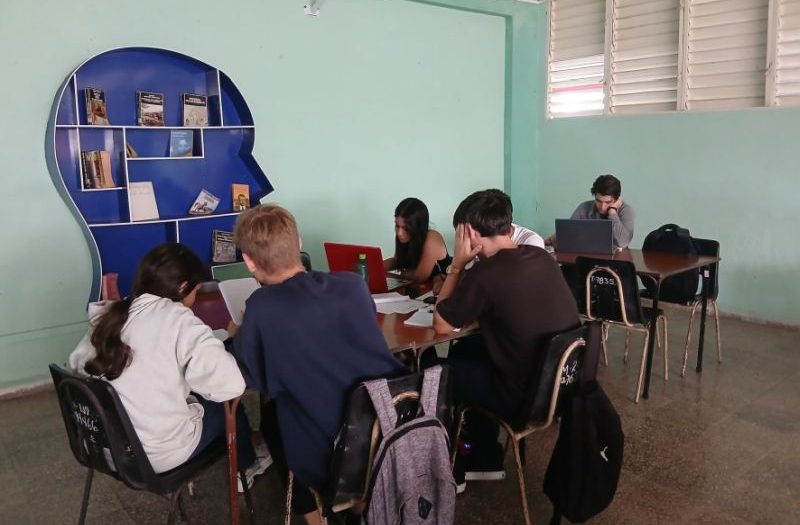
In September 1997, the electronic journal Pedagogía y Sociedad of the University of Sancti Spíritus José Martí Pérez (UNISS) was founded, and thus began a path that, almost three decades later, has led it to consolidate itself as one of the most important platforms for the dissemination of scientific events in the province.
The constancy of the editorial team and the ingenuity of the researchers who publish there have led Pedagogía y Sociedad to be indexed in high-impact global databases.
Among them, the Directory of Open Access Journals (DOAJ) stands out, which allows this scientific publication to have greater global reach, as well as better international positioning of its articles and the possibility for Cuban and foreign professors in doctoral training to disseminate their scientific results through it.
On this subject, Lidia Esther Estrada Jiménez, director of the Center for Learning and Research Resources (CRAI) of UNISS, stated: “We reach this 29th anniversary with an excellent editorial team, whose constant work and dedication are the great architects of the results we boast today, the same ones that consolidate us globally and commit us to continue perfecting our work in order to continue growing.”
Among the imminent challenges of this publication is its insertion into the Scientific Electronic Library Online, better known as SciELO Cuba, a prestigious network of scientific journals grouped under selection criteria.
“Entering SciELO Cuba is one of the requirements imposed by our ministry for publications of this type; therefore, we have already carried out the self-evaluation process to analyze the necessary requirements and, from now on, we must begin to fill out the relevant forms and applications,” pointed out the director of the CRAI at UNISS.
The new anniversary of this publication will be celebrated at the University of Sancti Spíritus throughout September with talks, digital dissemination activities on social and academic networks, as well as special meetings to recognize the work of the editorial group and the authors behind it.
“The journal requires a high degree of dedication and dynamism to reach the point where we are now; it is also a great challenge to sustain it because one must be at the forefront of everything happening in the world at a scientific and methodological level to guarantee success,” concluded Estrada Jiménez.


Escambray reserves the right to publish comments.