 Escambray ENGLISH EDITION
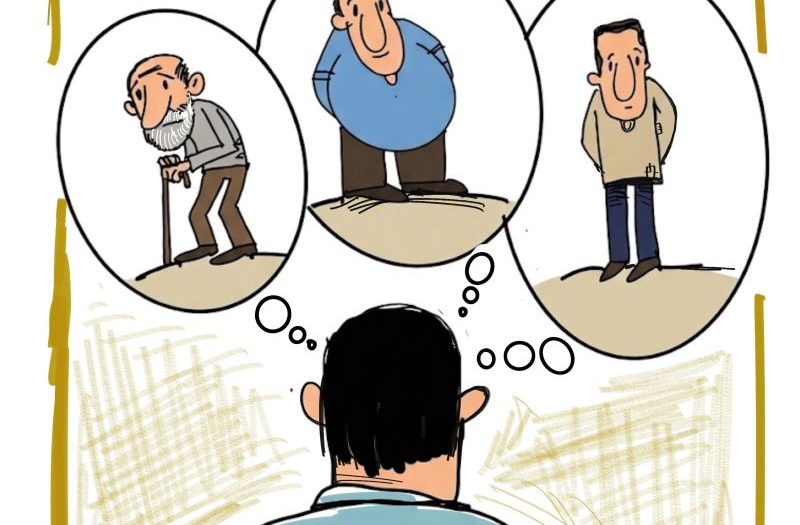
Several days have passed, and Nora, who has a visual disability that prevents her from holding a well-paid job, still does not understand why she does not qualify as a vulnerable person despite her precarious economic situation, while her neighbor, whose children abroad help her with food “combos” and even solar panels and an EcoFlow, was able to access the 8 pounds of rice distributed in the state-run grocery stores for people in vulnerable situations.
Like Nora, quite a few Sancti Spíritus residents wonder what requirements a person or family unit must meet to receive products subsidized by the country, a reality being implemented these days as part of the 176 Economic and Social Transformations approved by the Cuban government.
Two of the 23 thematic axes addressed by the new social transformations aim to improve the island’s social environment, aggravated by the tightening of the blockade and the economic strangulation policy promoted by Donald Trump’s administration against Cuba.
In the broad document that groups the so-called transformations, it is proposed to modify the current scheme toward a model centered on people and not on products, with the elimination of generalized subsidies for goods and redirecting them directly to individuals in vulnerable situations, along with the creation of a Social Protection Fund, intended to strengthen attention to those people and guarantee greater effectiveness in the coverage of social policies.
But is it known for certain who is vulnerable? Some scholars define vulnerability as that which limits or hinders the capacity of a person, family, household, group, or community to anticipate, cope with, resist, and recover from the effect of a natural, social, economic, or health threat, although.
Bringing it down to our country, it is, in principle, about people in poverty, the homeless seen wandering the streets, sick people who urgently need any type of medicine that does not exist in the country, and older adults who live alone and forgotten.
In every neighborhood there are such people, and every day there are more of them in an aging and economically impoverished society, where limitations reach even those with an above-average salary, but are more acute among elderly people living alone and families in social disadvantage.
Around the issue, questions come and go: some respond to the fact that a person who can work and is not doing so is not vulnerable; if because she has three or more children a mother can stay at home depending on social assistance, when the logical thing would be to offer her employment, solutions for childcare, and demand paternal responsibility, among others.
Hence the importance of making the management of aid transparent through the use of the Soberanía platform, as a new way to update in real time the registry of people and families in vulnerable situations, so that the different forms of assistance, their traceability, and government and public control are systematized.
Some steps are already being taken related to the rest of the changes needed to alleviate current conditions, such as supporting payments to pensioners through agreements with banks and having economic actors, as part of their responsibility, contribute to sustaining social policies, also with support for community dining halls and care for homes for children without parental protection and for the elderly.
If achieved, other actions would to some extent ease day-to-day urgencies, among which stand out support for social and health transport, Health and Education institutions, as well as community sanitation and the distribution of monthly basic packages for vulnerable people.
Much more could be done, and it is set out as such: establish differentiated prices, discounts, free services, or solidarity quotas, create monthly basic packages, offer employment, training, or apprenticeships to people in that condition, and support funeral services for families without resources, as well as promote fairs and popular sales in complex communities.
The lines of action for the coming months are drawn, as Cuban Prime Minister Manuel Marrero Cruz has reiterated, who has insisted on the priority of implementing a set of actions aimed at strengthening social protection, modernizing the management of aid, and expanding the participation of economic actors in the welfare system as protection mechanisms that concentrate resources on those who need them most, without weakening everyone’s access to essential services of general scope.


Escambray reserves the right to publish comments.