 Escambray ENGLISH EDITION
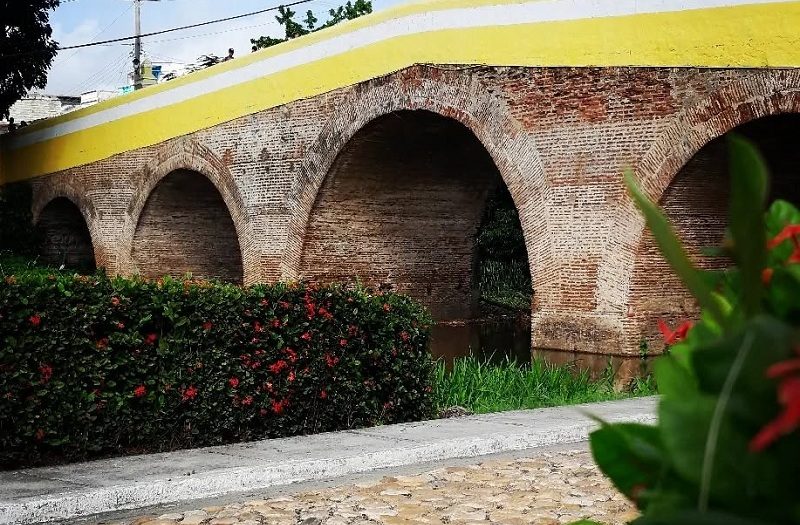
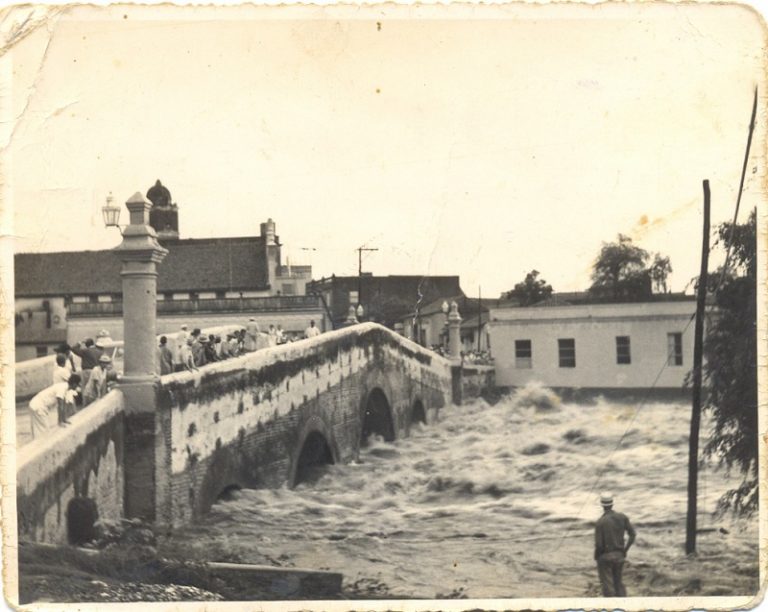
Together with the silhouette of the Major Parish Church and the Principal Theater, it is the image that identifies Sancti Spíritus around the world. Beneath its brick and rubble-masonry arches flows the Yayabo, clear and calm, a course of seemingly harmless waters. “It’s too much bridge for so little river,” some have said; but it only takes a proper storm for the river to say “here I am” and threaten to overflow the solid walls of the viaduct.
Raised southwest of the current historic urban center, at the old Paso de las Carretas, the bridge is much more than a communication route between the city and the Colón neighborhood: it is the heritage symbol par excellence of the fourth villa and the only example of its kind preserved in Cuba.
195 years after its completion, it still stands with the firmness of brick, lime, and sand—oral tradition attributes donkey milk to its mortar—although today it is besieged by aquatic plants that require urgent attention.
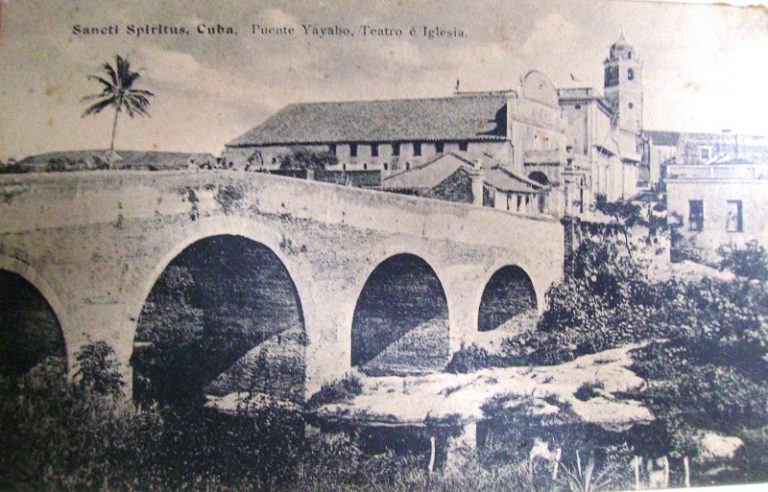
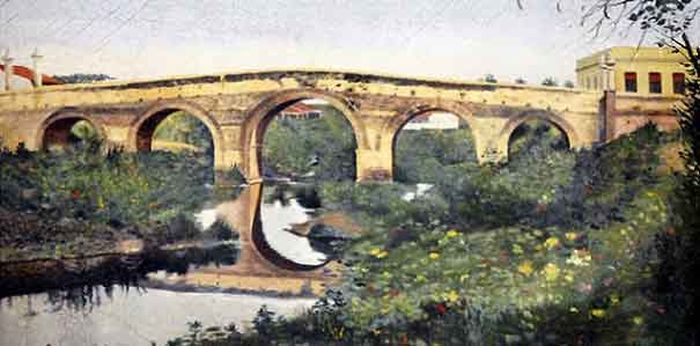
The archives attest to the concern of the people of Sancti Spíritus long before the first stone was laid. From 1660, residents demanded the construction of a viaduct that would unite the banks of the Yayabo. The Síndico Procurador General, Don Vicente Valerino, presented the initial motion, but it was not until 1771 that the first project was drawn up.
Construction, however, did not begin until 1817, and it was possible thanks to public contributions, including that of Bishop Juan José Díaz de Espada y Fernández de Landa during his second visit to the villa in 1819.
Under the direction of master masons Don Domingo Valverde and Don Blas Cabrera, a project of five arches was materialized, with the central one more raised, and with heights decreasing toward the ravines. Materials were contracted from the brick and tile kilns of Sancti Spíritus, and the main labor force was municipal prisoners. The work was completed in 1831, at a cost of more than 30,000 pesos. Its height exceeds 9 meters and its length reaches 85 meters.
For nearly two centuries, the iconic bridge has withstood floods, hurricanes, and the onslaughts of urban development—three “antagonists” joined for some time now by the invasion of parasitic plants in the riverbed that threatens to undermine the very foundations of the viaduct.
A thick layer of the so-called malangueta—water hyacinth, an invasive species that destroys ecosystems—covers part of the river and forms a kind of island where not only abundant vegetation proliferates, but also trash and waste of all kinds.
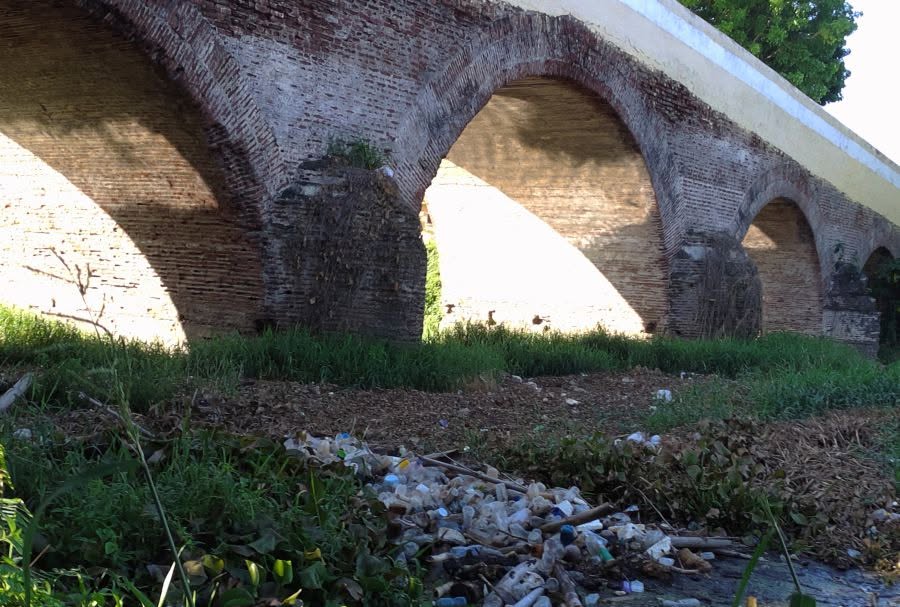
What began as a neighborhood complaint has become an island of waste that even heavy rains have failed to wash away: plastic and organic waste remains trapped among the plants, right in the area near the bridge, one of the most heavily traveled in the city.
Workers at the Yayabo Tavern, located on the riverbank, and residents of the most affected area agree that since 2014 there had not been such a large amount of solid waste there, to the point of blocking the flow of water and creating a kind of dam.
Not even the city’s most recent anniversary, celebrated last June, was a suitable moment for institutions to agree on cleaning and dredging the riverbed. Quite a few Sancti Spíritus residents wonder whether they will have to pray for a miracle of nature—a saving flood—to resolve what human action has postponed.
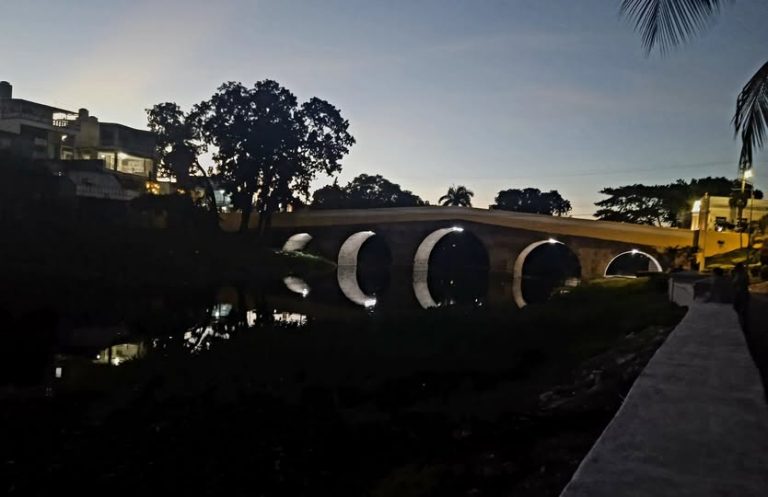
The history of this bridge was written with everyone’s contribution: with a síndico’s motion, with a bishop’s alms, with the sweat of prisoners and masons.
Today, 195 years later, circumstances demand the same: that the entire city look again at its bridge, not as a museum monument, but as the living symbol of “espirituanidad” that it has always been.




Escambray reserves the right to publish comments.